Skip to content
The streaming wars have essentially changed the nature of how we consume media. The secret to every successful over-the-top (OTT) platform (Netflix to Disney+ to smaller niche services) is a complex architectural foundation that can be tuned so that when millions of people are watching at the same time, everything operates smoothly, or that the platform collapses under the load.
The architecture choices of the initial stages of OTT platform development have ripple effects that will be felt by user experience to the cost of operation over the next years.
The Background: Microservices vs. Monolithic Architecture
The initial momentous decision that OTT platform architects must take is the selection of monolithic and microservices architectures. Monolithic systems are also easy to develop and deploy but they soon become cumbersome as platforms grow.
There is a single codebase that deals with user authentication, content management, recommendation engines, and video delivery which has a brittle nature that is more problematic with increasing user bases.
Microservices architecture has become the mainstream of successful OTTs. Platforms can become scalable by breaking down the system into discrete independently deployable services, whereby particular components can be scaled depending on serving demand.
Video delivery services can be scaled horizontally where the recommendation services have a fixed capacity during peak viewing hours. This granular resource control is simply converted into cost-effectiveness and system resilience.
But microservices add complexity of their own. Inter-service communication and service discovery, as well as distributed transaction management, demand the complex orchestration.
It is at this point that skilled development partners will prove to be very important. CodeDTX has guided many OTTs through these architectural choices, using AI-driven product engineering to make discoveries faster and be able to scale at the very first step.
Their capability of creating MVPs within 30 days allows platforms to prove their architectural decisions at the beginning, before huge resources are invested.
Presentation: The CDN Strategy
Content delivery is the biggest technical and financial problem of OTT platforms. Video files are very big and to transfer them to the rest of the world with a low latency it is necessary to use a strategic deployment of CDN (Content Delivery Network).
The decision to develop your own CDN or to use the services of current vendors, such as Cloudflare, Akamai, or AWS CloudFront, is based on the size of the business, the spread of the business across the geographic area, and the financial resources.
The extreme is Open Connect by Netflix: a custom CDN that deploys appliances straight into the networks of ISPs.
This method provides unmatched level of control over the quality of delivery and high costs of scale though immense investment and continuous operational skills are needed.
A multi-CDN strategy offers a good tradeoff between performance and cost in most platforms. Placing content on various CDN providers allows the platforms to optimise regional performance, negotiate lower rates and to be redundant to provider outages.
The growing significance of edge computing in the strategy of CDN. Platforms can take real-time transcoding, personalization, and perhaps even ad insertion to the edge by pushing not only content but also compute capabilities to the edge as well.
This minimizes backbone traffic and maximizes response time, especially in the case of live streaming when milliseconds count.
The Importance of an Experience
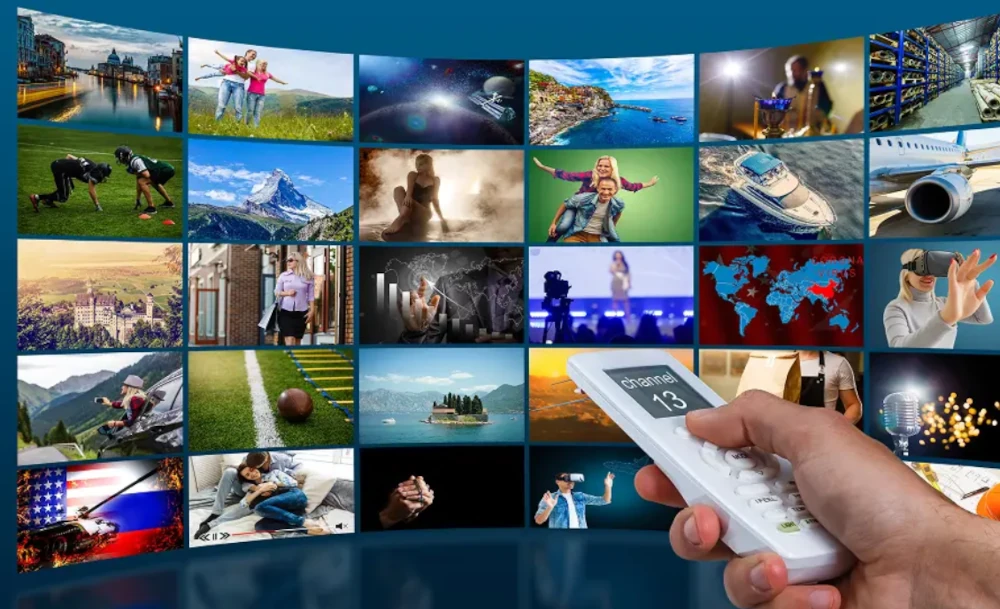
Scalability can be achieved on the backend architecture, but the user experience defines the success of a platform.
Even the most advanced streaming infrastructure will not matter unless the users cannot find something they want to watch or have troubles controlling the playbacks.
The world-level UI/UX design should address the needs of both non-visual and visual components in dozens of types and sizes of devices.
The development of OTT platform at CodeDTX is cognizant of this important balance. Their combination of AI-based engineering with the best of the best in terms of UI/UX design assists the platforms in developing interfaces that do not only appear beautiful but also scale effectively.
Their design philosophy makes sure that beautiful interfaces do not need to sacrifice loading time, or responsiveness- important considerations in retaining users.
The problem is more than the visual design. The perception of speed will be created by smart preloading of content metadata, progressive loading of interface elements, and predictive caching, which is based on user behavior patterns. Every millisecond matters when users play.
The interface should convey system status in a clear and understandable manner; buffering indicators, quality switches, and error messages in a non-distracting manner.
Video Processing Pipeline: Encoding and Transcoding
The processing pipeline of video is the core of any OTT platform. Raw content needs to be encoded in various formats, resolutions and bitrates to serve the massively diverse devices and network conditions in the wild.
Architectural choices on this matter do affect experience quality and infrastructure expenses.
Adaptive bitrate streaming (ABR) is now table-stakes, and the leading protocols are HLS and DASH. The difficulty here is to establish the best encoding ladder – the combination of resolution and bitrate that gives the best quality under various network conditions.
These decisions are more and more influenced by machine learning that analyses the features of the content to develop personal encoding profiles.
Action scenes cannot be treated similarly to a dialogue-based drama and clever encoding can save bandwidth by up to 20-30 percent with no noticeable difference.
The incorporation of AI in this process is a major opportunity. The AI product engineering solutions by CodeDTX assist the platforms to apply intelligent encoding systems in real-time that learn by seeing patterns and network conditions to make the best encoding decisions.
This is an AI-based strategy that can significantly decrease infrastructure expenses and enhance quality of experience.
Data Architecture: Analytics and Personalization
Current OTT platforms are data-driven companies. Every play, pause, skip, and search sends valuable signals to fuel recommendation algorithms, content acquisition decisions and platform optimizations.
The data architecture should be able to process real-time streaming data as well as batch massive data.
A strong foundation of the Lambda architecture pattern, which incorporates both batch and stream processing, is offered.
Apache Kafka is usually the central nervous system, which consumes events of millions of concurrent sessions.
Stream processing engines such as Apache Flink or Spark streaming work with real-time analytics such as identifying quality problems, updating the watch status, and sending personalized notifications.
AI and machine learning is used to convert this raw data into useful insights. Deep learning-based recommendation engines have the ability to suggest user preferences with astonishing accuracy, which drives more interaction and decreases churn.
CodeDTX competence in the engineering of AI products allows platforms to launch advanced personalization systems that are not simple collaborative filtering, taking into account contextual elements such as time of day, type of device, and viewing history to build genuinely personalized experiences.
Quickly Testing the Idea and Proving It
The OTT market is accelerated. New entrants are appearing constantly, audience tastes are changing quickly, and technology is always changing.
The capability to test new ideas fast and iterate on them depending on the user feedback is a critical competitive advantage.
This is where the 30-day MVP strategy of CodeDTX is especially beneficial to OTT-platforms.
Rather than building an entire platform with all kinds of features that may or may not be the right fit, companies can release a focused, scalable MVP, that helps prove if their assumptions about their target audience and content strategy are accurate.
By enabling platforms to fail cheap or fast and scale when finding product-market fit, this cycle of rapid development is enabled through AI-assisted engineering and makes such products and services a reality.
The MVP does not imply quality or scalability trade-off. Using fundamental attributes and capitalising on proven architecture, platforms have the ability to create strong base in order to support future development as well as coming to the market as quickly as possible.
Scalability Patterns: Managing Peak Loads
OTT platforms suffer excessive increases and decreases in traffic. The release of a successful show has the potential to push 10x the usual traffic in a few minutes.
The architectural designs on how to deal with such spikes differentiate between successful platforms and those that feature in the headlines as a result of outages.
Circuit breakers are used to avoid cascade failures in the event that dependent services are struggling.
Rate limiting ensures that the backend services do not become overwhelmed and request queuing evens out spikes in traffic.
Such patterns need close tuning – too aggressive, and you will choke your users out; too lenient, and you can demolish the system.
Auto-scaling has to be predictive as opposed to purely reactive. Platforms are able to scale infrastructures in advance of demand bursts by looking at past trends and tracking leading indicators.
Machine learning algorithms can forecast the viewing behavior based on the content releases, advertising campaigns and even the weather conditions.
Conclusion
The design of an OTT platform to scale needs to be carefully balanced with many architectural trade-offs without losing sight of the user experience and speed of iteration.
These service architecture choices, content delivery, video processing and data management decisions form the basis of future expansion.
Increasingly, success in the OTT space is measured by the capability to blend technical excellence and speed to market.
The partners such as CodeDTX with their distinctive blend of AI products engineering, globally acclaimed UI/UX design, and expedited creation of MVPs have assisted platforms to surmount these issues.
Their practice enables OTTs to experiment and iterate toward concepts, develop scalable infrastructure, and develop high-quality user experiences that can be easily distinguished in a rapidly growing market.
With viewing behavior increasingly moving towards on demand consumption and new technologies such as 8K video, interactive content and AI-driven personalization becoming mainstream, the architectural choices of today will dictate what platforms will succeed tomorrow.
It is all about creating foundations that can develop and grow with the ability to stay agile to market changes.
Within the context of OTT, success is achieved through the combination of strong architecture with speedy innovation, a combination that characterizes the future generation of streaming platforms.